CircleHalo
The operations layer made-to-order brands were missing: from checkout to finished product in one system.
- Year
- 2026
- Role
- Sole full-stack engineer - UI design, frontend, backend, CMS
- Stack
- Next.js, React, TypeScript, Express.js, Strapi
- Website
- circlehalo.com
Overview
Most commerce platforms consider the job done once the payment clears. For made-to-order sellers, that is where the real work begins: custom files, production queues, team assignments and customers waiting for updates. CircleHalo brings all of it into one interface. I am the sole full-stack engineer on the product, responsible for the UI system, the frontend, the backend workflows, the integrations and the headless CMS.
The challenge
Fulfilment tools are built for inventory that is ready to ship. Made-to-order orders arrive with custom specifications, customer files and variable production times, and status updates usually travel through manual messages across disconnected tools.
The product had to absorb that complexity without slowing anyone down: dense order data had to stay readable at a glance, and every change had to reach the right person at the right moment.
What I built
- 01
One design system, 40+ screens
Every screen is built from the same system of data tables, status badges, contextual drawers and filters, so new modules feel native from day one.
- 02
A frontend that stays fast under load
Large order lists render quickly, filter instantly on the client and update state smoothly, so teams can work through hundreds of orders without waiting.
- 03
Automated order workflows
Orders from connected stores are routed automatically, status changes trigger the next step, and third-party store integrations run in the background.
- 04
A CMS marketing can run alone
More than 60 reusable Strapi components let the marketing team assemble landing pages without opening a ticket.
Why this stack
- Next.js and TypeScript
- A data-heavy interface needs predictable state and fast rendering. TypeScript keeps 40+ screens consistent, and Next.js serves both the application and the public site from one codebase.
- Express.js
- Order routing and status triggers are custom business rules. A lean Express.js service keeps that logic explicit and easy to extend for each new integration.
- Strapi as a headless CMS
- Content changes weekly, code should not. A component-based CMS separates marketing pages from releases.
Outcome
Orders now flow from live stores straight into production queues, without manual handoffs. The component library shortens the path from idea to shipped module, and marketing publishes pages on its own. The product keeps growing, and I continue to lead its engineering.
Screens
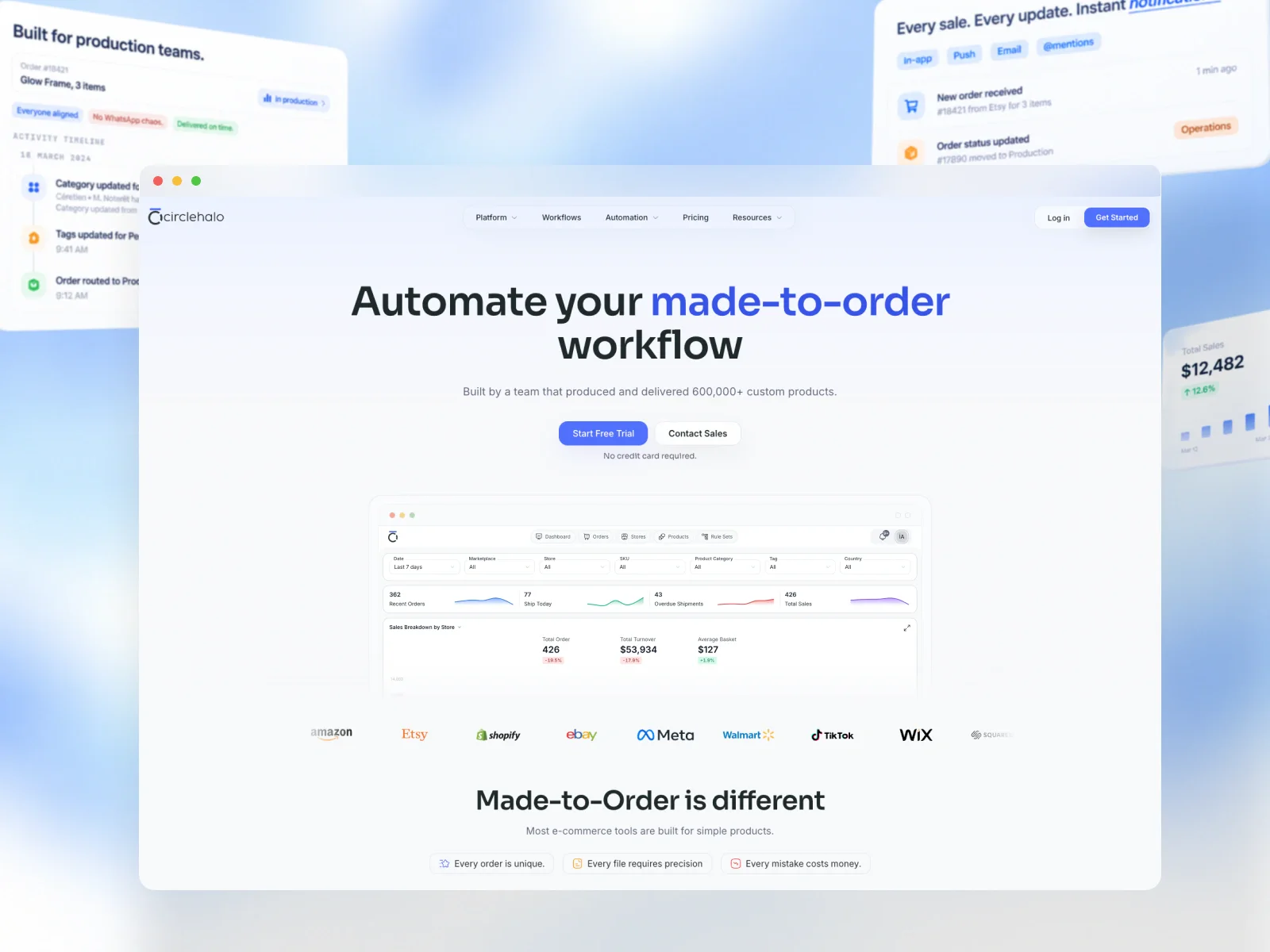
Product overview 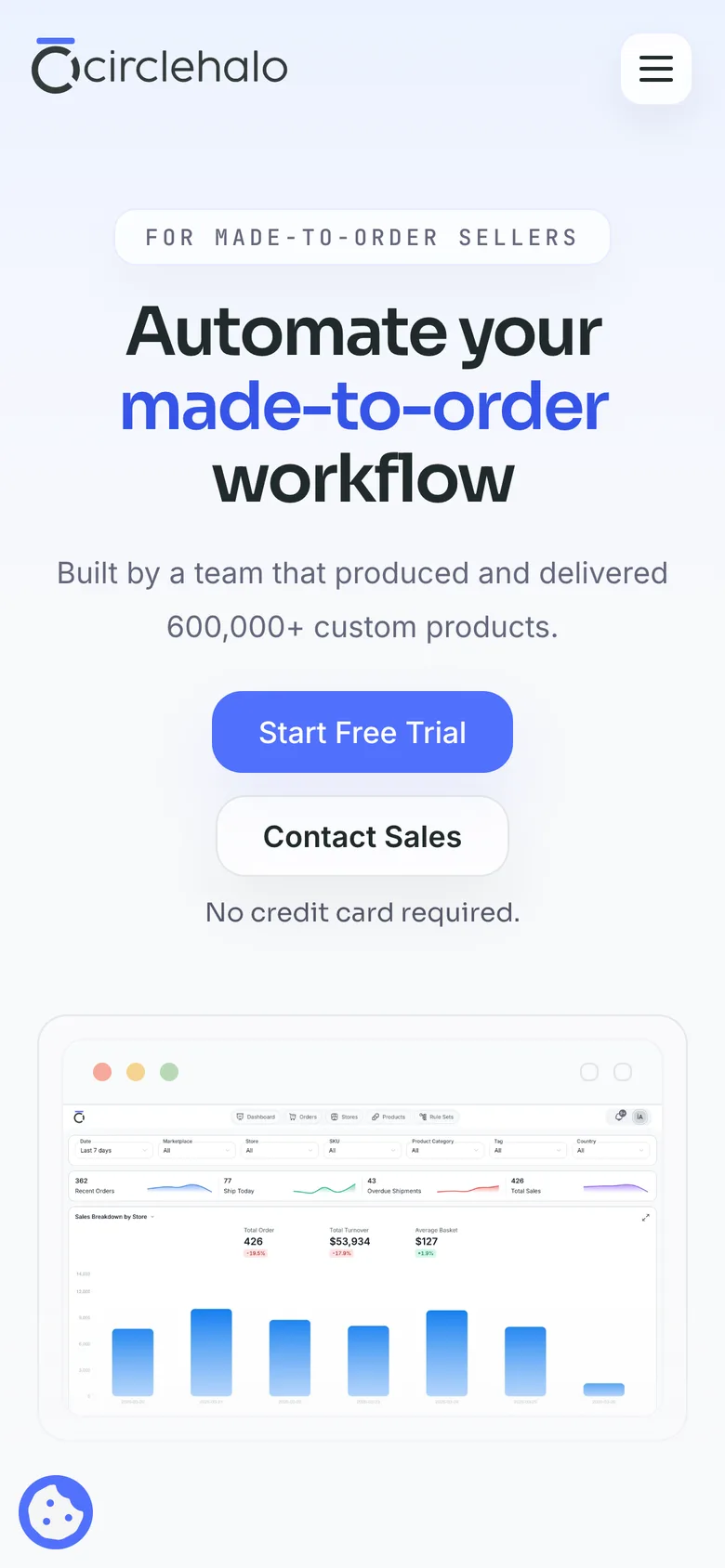
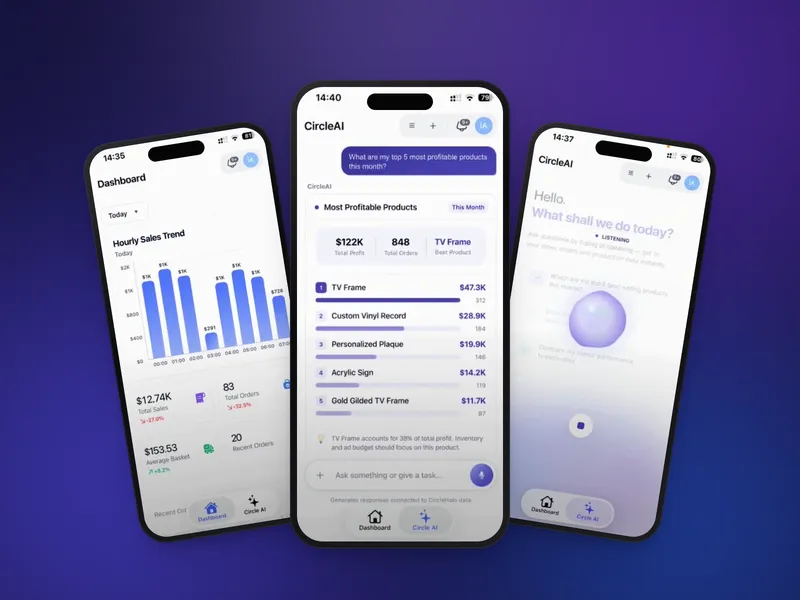
Mobile
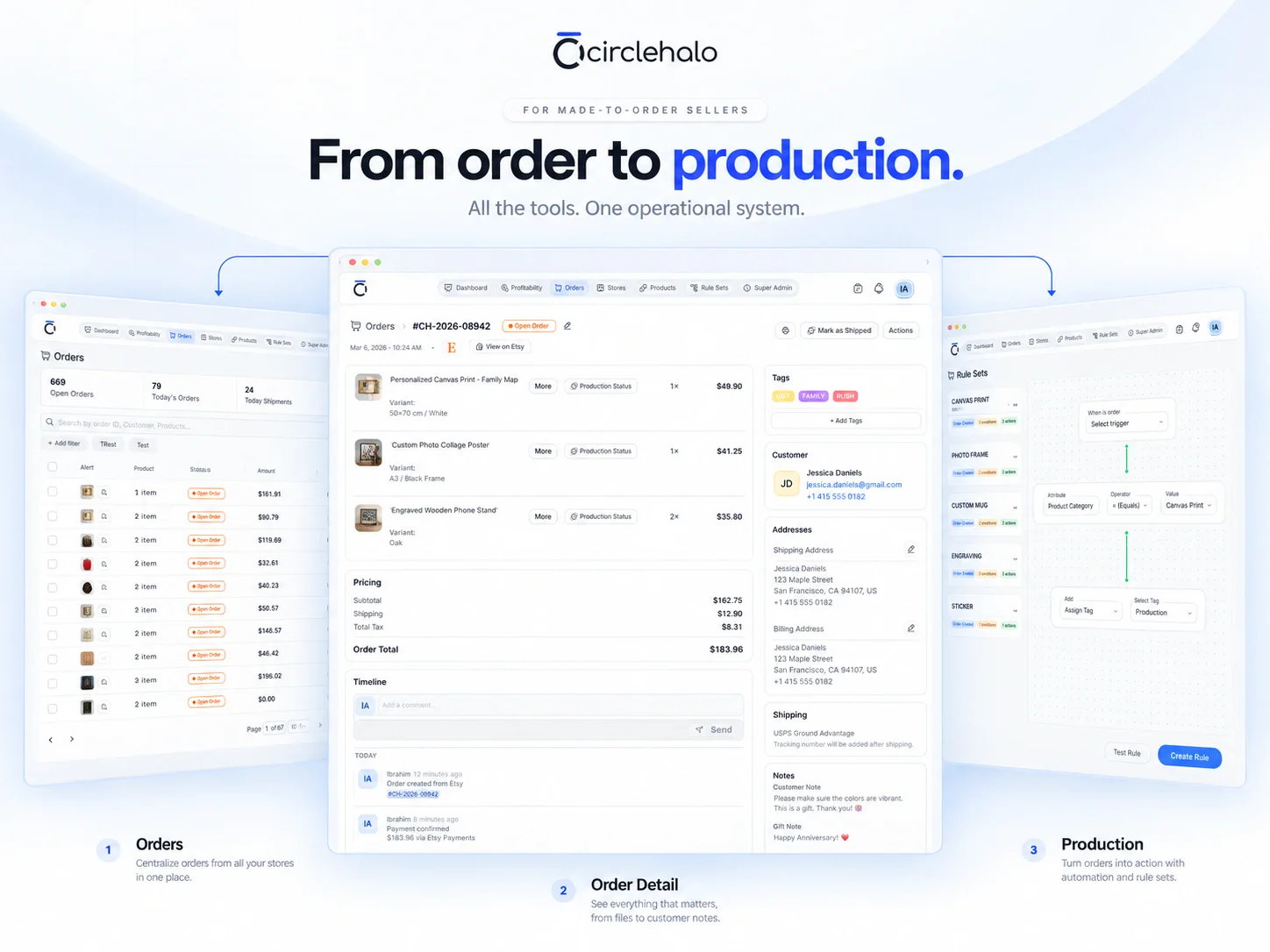
From order to production 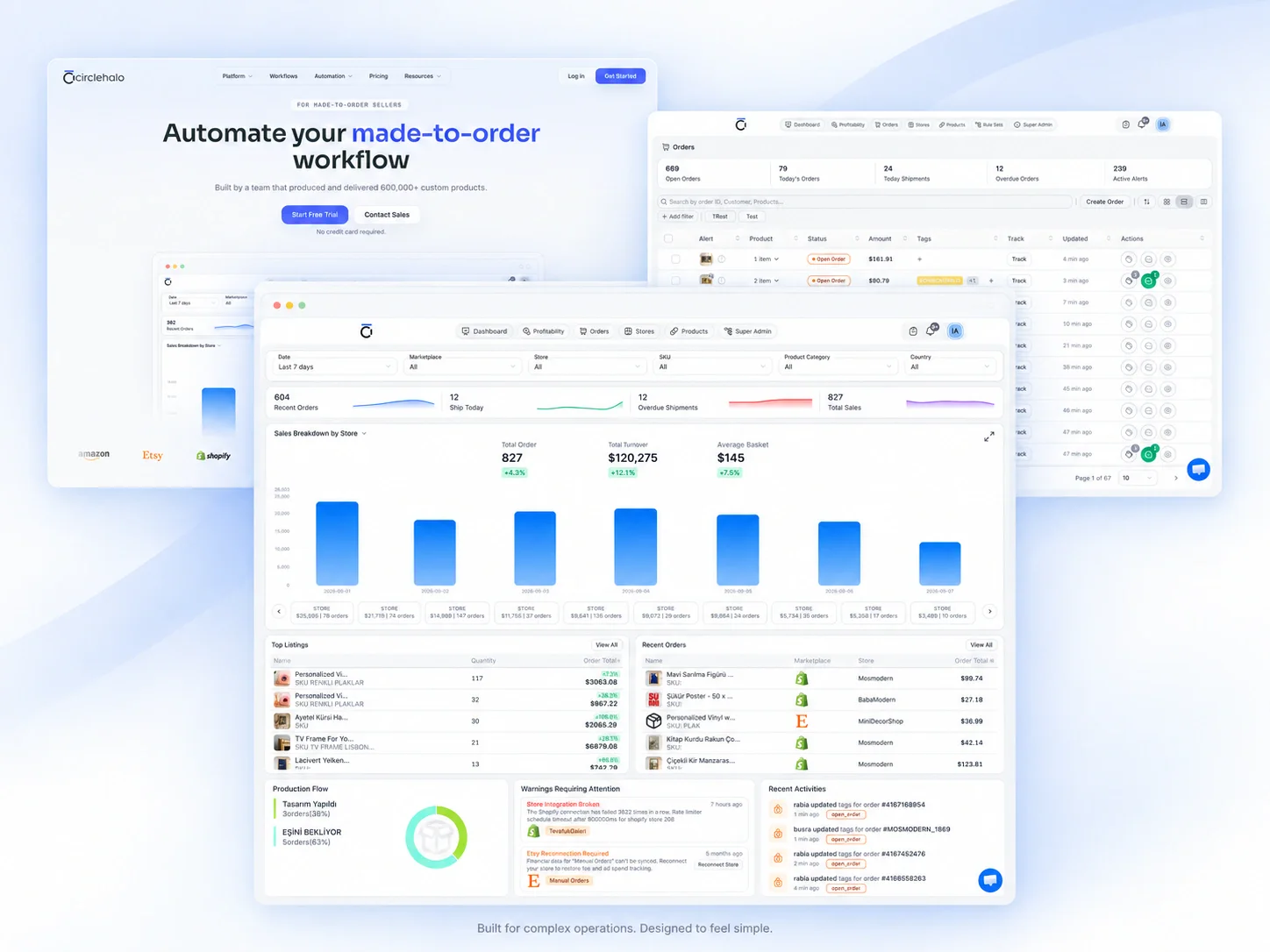
Dashboard and analytics 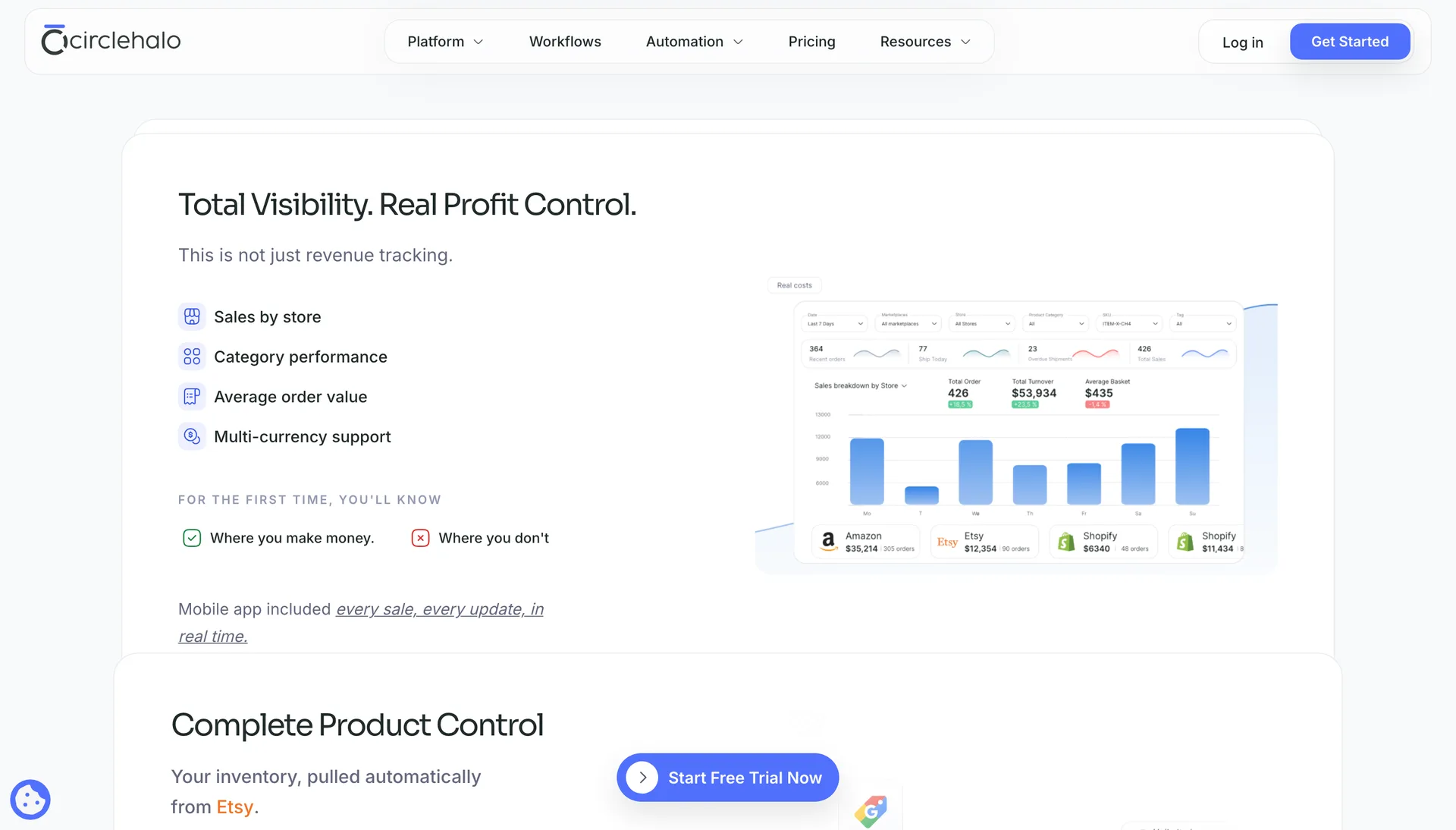
Multi-store reporting
 Next projectCircleHalo Mobile
Have a product like this in mind?
I take products from scope to launch: interface, backend, integrations and the details that make them hold up with real users.